Thursday, 23 October 2014

Review: Nobody's Child by Kate Adie

As a journalist, Kate Adie has a knack for interviewing people, and getting them to open up, and it's knack that's displayed in Nobody's Child from the get-go.

Partially a memoir about Adie's own upbringing as an adopted child, partially a history of foundling children, adoption and fostering, and partially a collection of interviews, Nobody's Child is shot through with humanity.

Adie frames each chapter of Nobody's Child around a question, from the opening "what is your name?" to the closing "do you have a criminal record?". Some questions may seem like they're easy to answer, but Adie's purpose is to explore what these questions mean for people who don't have access to those pieces of information that we so readily attribute to being part of someone's identity.

I really liked the social history Adie dotted throughout Nobody's Child, looking at the different ways in which church, state and society at large, in a variety of countries, tried to deal with abandoned, unwanted and orphaned children, most of the time unsuccessfully or with a cruelty they did not seem to acknowledge.

In between this, and her own story, come the stories of various people Adie has interviewed, nearly all of them foundlings. And it's with these stories that the book becomes less like a book, and more like watching someone be interviewed. In most cases, Adie chooses to reproduce entire conversations with her interview subjects, which often are monologues. It's unconventional in a narrative book, and unlike anything of Adie's that I've read before, but it's powerful reading when it comes complete with rhetorical questions, awkward comments, half-told jokes and more.

Nobody's Child is a moving read, at once both the personal story of Adie and her interviewees, and also a damning account of the difficulties foundlings have faced, and still continue to face. It's a book to make you angry, but also one filled with hope.

How I got this book: Bought

Monday, 20 October 2014

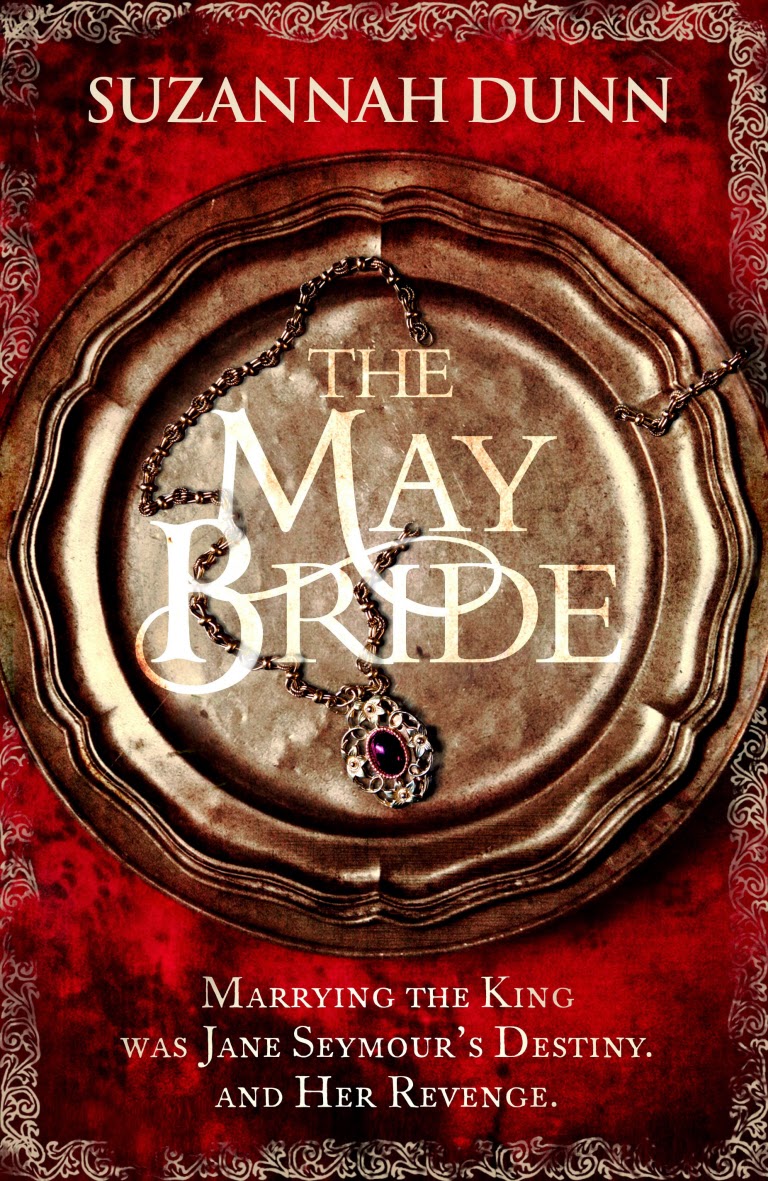
Review: The May Bride by Suzannah Dunn

The reign and life of King Henry VIII always provides great fodder for books, television and film, and Suzannah Dunn taps into that fascination for her novel, The May Bride.

Not that Henry VIII makes much of an appearance in The May Bride - this is firmly a book about Jane Seymour and her life in the years before she went to court. When she is 15, Jane's brother brings home his new wife Katherine Filliol. Older than Jane and more wild than anyone in the Seymour family, Jane finds herself drawn into an intense friendship with Katherine which burns brightly for one summer, before fading out. Two years later, Katherine's husband makes an accusation against his wife that will change the Seymours forever, and that will inform the way Jane acts when she becomes part of the court of Catherine of Aragon.

Written by an older, wiser, Jane who is about to marry Henry VIII, it is clear from the beginning of The May Bride that something truly terrible has happened to the Seymour family, and that Katherine is at the centre of whatever went wrong. From almost the very beginning of the first chapter, we see Jane blaming herself for not having seen Katherine properly. Dunn's book is not about revealing what Katherine has done as much as it is about Jane coming to terms with her role in what happened, and the guilt she feels. As the book progressed, I found myself more fascinated with Jane's actions and reactions than by finding out what Katherine's role was, perhaps partially because I could guess the gist of Katherine's deed from close to the beginning of the novel.

Where Dunn's book really shines is in the portrayal of the friendship between Jane and Katherine. As an impressionable 15-year-old, Jane is enamoured with Katherine. It might be difficult for anyone living in the 21st century to imagine such a relationship forming, but it's easy to understand Jane's feelings when you consider how isolated she was and how normal the Seymours' existence was until Katherine arrived like a whirlwind.

The May Bride is a slow burn book, which builds to its central revelation gradually, and then crests slowly downward, and into more familiar territory to those of us who learnt about Henry VIII's wives at school - but this is a book that puts women in the centre, and marginalises the famous king, although his relationship with Jane hangs over the entire novel. Dunn gives a voice to Jane, and, although we never hear from her directly, to Katherine as well, who despite her bravery and brightness is the person most without a voice in the novel.

Dunn's novel is all fiction, but it's based on real events, and is an interesting take and filling of the gaps on a story we think we know the most important part of. Reading The May Bride made me realise that it wasn't Jane's marriage to Henry that was fascinating, it was her past that made her the woman she was.

How I got this book: From the publisher, Little, Brown. This did not affect my review.

Saturday, 18 October 2014

Feminism and The 100 - part two

I've already dealt with leadership in The 100, which I think clearly shows the show's feminist credentials, but there's plenty more going on, and we'll start with something that often defines women in television...

Motherhood
Mothers are vulnerable, right? They're either too busy being emotional wrecks because of their children, or sacrificing themselves for their kids, or childbirth is making them physically weak, right? Wrong. The 100's depiction of motherhood (and parenthood) is that it is something completely normal, with the mothers on the programme actually stronger than many of their male counterparts. Motherhood is rarely used as the main defining characteristic of any of the women in The 100, but it is a large and important part of the show, in a positive way.

Feminism and The 100 - part one

The 100 - a teen drama full of gorgeous people, carefully crafted settings, a lot of drama, and a good dash of romance? Well, yes. But somewhere along the way, as I watched season one of The 100, I realised it's also something more.

Somehow, The 100 went from being a piece of dystopian fun (I use the word fun loosely) to being a teen show that totally rocks it on gender equality and its presentation of females. Not only does The 100 present women as powerful, it also presents them as equal, and that, my friends, is what feminism is all about.

Feminism is often misunderstood, with people thinking that it's about women wanting to supersede men, to somehow be better than them, and for men to be under their command. But it's not, or at least not for me, and I think not for The 100. Feminism is about equality, about men and women being treated the same, offered the same opportunities, and criticised in the same way.

Season two of The 100 is about to hit our screens, so here's a quick look at how this seemingly popcorn show is one of the most gender balanced, feminist programmes currently on television (in my opinion), which is all down to the writers, directors and so on. Warning, I'm not a scholar of feminism, so these are just my opinions. And another warning, spoilers for season one ahead...

Tuesday, 14 October 2014

Man Booker Prize 2014 - shortlist reviews

The 2014 Man Booker Prize is awarded tonight and I've been working my way, slowly, through the six shortlisted books. Here are my thoughts on each, in the order I've read them, and which I think should win this year's prize.

We Are All Completely Beside Ourselves by Karen Joy Fowler
I guessed the 'twist' of Fower's novel because of my habit of flicking to the back of books to see how many pages there are, but it didn't spoil my enjoyment of the book. By far the quickest and easiest read on the shortlist, I thought the book had plenty of depth, and its central character, a woman struggling with guilt and the demands of family, was interesting if an unreliable narrator. Although Rosemary had a very unusual upbringing, I thought she was relatable – her issues with her family, her strange frenemy style relationship with Harlow, and her uncertainty about what to do with her life are all things we’ve lived through. She was made more interesting by the fact that her family was told purely through her eyes, meaning the reader has to take everything she says with a pinch of salt, although she's just unreliable not dishonest. Families are at the centre of the book, and I loved the spectrum Fowler showed, from  poor Todd’s terrible, terrible father to Harlow’s sweet and unappreciated parents to Rosemary’s own misunderstood family. We Are All Completely Beside Ourselves is an easy yet thoughtful read, but much as I loved it, I don’t think it’s this year's Man Booker Prize winner.

To Rise Again at a Decent Hour by Joshua Ferris
I also don't think To Rise Again at a Decent Hour is this year's winner, and it's my least favourite of the six shortlisted. I really, really struggled with this book the entire time I was reading it, and it took me far longer to read than it should have. I found the main character, Paul O’Rourke, grating, and his habit of calling a mobile phone a “me-machine” reminded me of something a four-year-old might say. Paul was implausibly awkward, and his behaviour was never fully explained – I’d have liked to have delved more into his upbringing, which clearly moulded him, but Ferris kept those visits to the past very brief. Everything about baseball and dentistry went over my head, and I found all the religion stuff really dense and difficult to understand. I found myself in a cycle with this one - I didn't understand it so I didn't enjoy it so I didn't want to read it, and because I didn't want to read it, I didn't enjoy it and I carried on not understanding it. I did think the second half of To Rise Again... was better than the first, and the strongest part, for me, was the last third when things really started coming together and people moved (physically and metaphorically). But it's a no from me for this one.

The Narrow Road to the Deep North by Richard Flanagan
This is my pick for what I think should win. I picked it up thinking it would be the story of a prisoner of war, and put it down after having read something completely different. Like Ali Smith's How to be Both (see below), The Narrow Road to the Deep North plays with timelines, and is split into a number of sections. Its main character, Dorrigo Evans, is at once unlikeable, yet honourable and with many redeeming qualities, and I grew to eventually like him, while still deploring many of his actions. Flanagan creates a multitude of heartbreaking moments in the POW camp - during one scene I felt more than a little sick to my stomach, and I'm not at all squeamish - and contrasts these with lighter, hazier moments capturing Dorrigo and his one true love as they meet and fall for each other. The Narrow Road to the Deep North is a novel about heroism in its many different forms, as well as love, and it focused on a part of Second World War history I barely know anything about (to my shame). I left this book feeling like I'd read something that would stay with me for a while, and that's one of the many reasons I think it should win. 

J by Howard Jacobson
A former winner of the prize, I had high hopes for Jacobson's J, which has been described as unlike any of his previous works. Unfortunately, I just didn't click with this book. I liked the dystopian world, where an event known as What Happened, If It Happened has coloured everything from the economy to the behaviour of the populace to people's names, but Jacobson chose to keep What Happened, If It Happened deliberately vague. Some people may like this as a device, and it was fine for a while, but I felt knowing more about it (besides the odd things I guessed later on in the book) would have helped me understand the characters and characterisation more. As it is, I found both Kevern and Ailinn, the central couple, lightly drawn, with their relationship constructed using stereotypes. I also had a hard time working out if some parts of the book were satirical, and a comment on current society (an exchange about domestic violence particularly springs to mind here). Like Ferris's To Rise Again... I thought the second half of the book was stronger, but the ending was, to me, devoid of hope, and depressing because of that.

How to be Both by Ali Smith
Structurally, this is the most interesting of the shortlisted books, comprising as it does of two separate but linked stories of a girl in the modern day and a renaissance artist in the 1460s. How to be Both is clever, but it's also immensely readable. My copy came with the modern day first (others come with the 1460s section first) and I loved getting into George's head. The flickering between past and present, which Smith does without signposting, was clever and shows a writer who has faith in her readers' ability to work out what's happening. The second part (my second part) is a whirlwind, and the writing shouldn't work, but it does. As a slight criticism, I'd say you can see he technique at play here, I didn't lose myself in the book and was always aware of Smith's narrative style, her play on words, and her structure. But it's a slight criticism, this is a very clever book, annd the half set in the 1460s is particular readable. Smith, shortlisted twice before for the Man Booker without winning, would be a worthy winner.

The Lives of Others by Neel Mukherjee
As I write, I haven't finished this book, so my comments here are based on the fifth that I have read. Mukherjee's book is intricate, from its construction to its characters to its setting. It features a vast cast of characters (so much so that I'm constantly having to flick to the family tree at the beginning to remember who I'm reading about) and its subject matter, of a family at a crossroads in 1970s India and a political movement that changed the country, is also expansive. Mukherjee handles it well, and his book is clearly well researched and beautifully written. He's the favourite to win this year's prize, and I can see why.

Tuesday, 30 September 2014

TV recap: the 100 episode 13, We Are All Grounders part two

Last time on The 100, Murphy almost succeeded in hanging Bellamy, who was saved by some clever work by Raven, which resulted in Raven being shot and Murphy escaping. Also escaping were Finn and Clarke, who got away from the Grounders and made it back to camp to warn everyone of an impending attack. Clarke ordered The 100 to get ready to leave, a decision Bellamy was not on board with. Up on the Ark, Chancellor Jaha came up with a plan to get the survivors down to earth by using the Ark as a launch ship.

Earth-bound
The 100 are packing up, but maintaining a guard round their camp, while listening to Raven scream as Clarke cauterises her wound. Raven, ever positive, says it's lucky she was shot by Murphy, rather than him taking the immense amount of rocket fuel that remains on the ship.

Bellamy is still annoyed at Clarke and Finn's plan to run. Finn and Bellamy have a manly bust up over it, but Clarke appeals to Bellamy, telling him they need him. He's not so convinced, citing their quick switch to Clarke's plan as evidence.

And so The 100 leave camp, which happens much earlier in the episode than I thought it would. As they leave, Bellamy reflects on the 18 of The 100 who are dead, Clarke focuses on the 82 that are alive. It's a poignant set of scenes, with the appropriately named The Other Side by Woodkid playing over it all and really adding to the sense of exodus. Poor The 100, first they were chucked off the Ark, now they're running from the only home they've known on earth.

And suddenly the music stops as Octavia hears something. And the an axe comes flying out of the forest and straight into some guy's face. So back to camp everyone runs. I guess that's why it came so early in the episode. Forced back, Clarke realises that The 100 are trapped exactly where the Grounders want them.

Octavia's plan is to fight off the Grounders' scouts and continue running, but Clarke reluctantly agrees to stay and fight, putting Bellamy in his element. Octavia heads into the forest to try and see off some Grounders, while Bellamy sets up a perimeter and decides how weapons will be used. There's only enough ammo to fight for a little while, and then the plan is to hide in the drop ship and hope the Grounders can't get through.

Only Clarke has a better plan, one that Raven gets straight away. The 100 will 'blast off' in the ship, setting a fire that will burn all the Grounders in the vicinity alive. Raven, despite now not being able to feel her legs because of her gunshot wound, somehow summons up the strength to instruct Clarke and Finn into wiring up the ship in the way they need. Finally showing some spine, Finn says he'll head out to Lincoln's cave to get some of coagulant herb that could stop the internal bleeding Raven is suffering from. It's a combination of guilt and more guilt that's making him do this, but it does result in Clarke confessing she can't face losing Finn again.

Now cloaked in darkness, The 100 can hear noises, and get a radio message from another guard station that Grounders are approaching. But the Grounders aren't attacking, even though The 100 are shooting at them. 

Clarke's not having much luck locating the wire Raven is after (cue cute rocket science joke) and then it gets serious, as Raven laments the fact that she used to be the girl picked first for everything, and now she's stuck, dying, on the ground, about to be attacked. It gives the two women the opportunity to bond, and for the first time get on without the shadow of Finn hovering over every interaction.

The 100 are rapidly using up their bullets, and Jasper finally figures out the Grounders are making them use up their ammunition before the real fighting starts. And then we cut to Murphy - turns out he also stole a radio and the Grounders have been listening in to The 100's communications this whole time. Now that they know about the mines, the Grounders decide they'll go straight for the attack. There's a battle but it all happens in the dark, and I couldn't tell what what happening. Lots of gunfire though and Octavia gets injured.

Finn finds Lincoln, who's annoyed that they haven't followed his instructions and left. It took him a while to shake the Reapers, but Finn decides he wants to use them. This is a stupid plan, I can tell already. But it just might work.

The Grounders are pretty much upon The 100 now, but Raven is flagging fast and the drop ship still isn't prepped to be used as a firebomb. And then everything and everyone stops to see a giant fireball in the sky - it's the Ark falling through the atmosphere to the ground.

It's a momentary reprieve, and the Grounders try and break down the gate. Before they get started, they hear Reapers approaching and make a run for it. Finn's stupid plan to get the Reapers and Grounders to attack one another has worked somehow, and he makes it back to camp and into Clarke's arms. 

Bellamy and Octavia are stuck in the forest, with not much hope of escaping, until Lincoln comes along. Octavia's wound is deep, and the only way to save her is for her to go with Lincoln. And for once, Bellamy lets go of his sister, telling her she needs to go with Lincoln. He sends her off, and it's really emotional and I can't talk about it because I have something in my eye.

The Grounders manage to beat the Reapers and head back to The 100's camp. Jasper, against everyone's expectations, has rigged the ship up properly and it's ready to 'go'. Everyone runs inside, apart from Bellamy, who is at the edge of camp. He gets into a fight with the head Grounder dude, and Finn, of all people, runs to his rescue. There's no time for Finn and Bellamy to get back into the ship, so Clarke leaves them behind and locks the doors. Oh goodness. Please survive.

Anya, bent on revenge, manages to propel herself into the drop ship just before the door shuts. Not the best decision she's ever made, although she still tries to fight. True to form, most of The 100 try to beat her up, but Clarke stops them by saying: "We are not Grounders."

And Jasper flips a switch, and the drop ship lifts a couple of feet into the air, spewing great plumes of fire all about. No one outside can have survived that. *sob*

The next morning, The 100 open the door to the drop ship to everything incinerated, covered in grey ash and skeletons lying everywhere. Clarke heads to two skeletons lying close together - are they Finn and Bellamy? Before anything else can happen, canisters of red smoke are thrown at The 100. Anya mutters 'Mountain Men' and then everyone collapses as figures in space suits and with laser beam guns come out of the smoke.

And then Clarke wakes up. She's lying on a white pillow, dressed in white, looking remarkably clean. Our view cuts to that of a camera, and we see Clarke is locked in a fairly well furnished but cold room. She walks to the door and sees out the window that Monty is in the room opposite her. He implores her to look at the sign on the wall - it says Mount Weather. Woah. This is Mount Weather? This is where The 100 were originally aiming for. Looks like they made it, but it's not quite what they thought.

On the Ark
Also planning to blast off are the guys on the Ark. They've got a plan, but they're not sure which parts of the ship will survive and make it to earth, and which will not. It all sounds very dangerous, and there's a lot they can't control, but they're determined to go ahead. 

The population split into different parts of the Ark, with Sinclair, Kane and Abby in one, and Chancellor Jaha in another. They count down to blast off and ... nothing happens. The remote detonation has failed, and Sinclair says the only option is for someone to launch the ships manually. Kane immediately volunteers, with Abby trying to stop him. As they say goodbye and Kane gets up, there is a judder and the ship moves. A delayed automatic reaction? Nope. Turns out Jaha made it to the controls first, and has decided to sacrifice himself to get the others to the ground. Oh man. What a guy. His plan is to reunite Abby and Clarke, while he reunites with Wells (RIP).

Jaha, alone on the ship, tries to radio to the stations that hurtled to earth, and finally hears back from Abby, who was on a ship that survived. Abby and Kane head up, open a trap door, and find themselves on earth. To one side of them is lush greenery and a beautiful lake, and there are blue skies, and mountains in the distance. Abby describes the scene to Jaha, who shuts his eyes and dreams. 

And then Kane notices a plume of smoke in the distance, which they think could be another station. And with Jaha's instructions to find Clarke and the other stations, he signs off, heads to a window, and watches the earth from his lonely ship. And he cracks open the bottle of alcohol that was being saved for when the population of the Ark got back to earth, and toasts the earth: "May we meet again." I wish we could Jaha, I kind of like you now.

Solid ground?
Please don't say Bellamy and Finn are dead. Please don't say Bellamy and Finn are dead. Please don't say Bellamy and Finn are dead. 

Maybe if I say it enough times, it'll be true. To be honest, I don't see how Bellamy and Finn can be dead. Well, I can how they would have died, but there's no way the showrunners of The 100 would kill them off, they're too valuable.

Anyway, what a season finale. There was a lot, a lot, in this episode, yet it didn't feel rushed. Most of it, however, did feel like tying up loose ends or moving people into a position that will make the start of season two interesting - no more Ark (unless Jaha somehow magically survives), so everyone is now on earth; The 100 captured by the Moutain Men; and Octavia and Lincoln escaping to wherever.

I'm sad that this series is over, but it's been a good one, right? Here's to series two.

ShareThis

Related Posts Plugin for WordPress, Blogger...